Beyond its rugged desert canyons and white-domed skylines, Oman harbors one of the Indian Ocean’s richest marine sanctuaries. Centered around the Daymaniyat Islands Nature Reserve, diving out of Muscat delivers high-voltage biodiversity: resident hawksbill turtles, carpet rays, schools of jacks, and seasonal visits from the world’s largest fish, the whale shark.
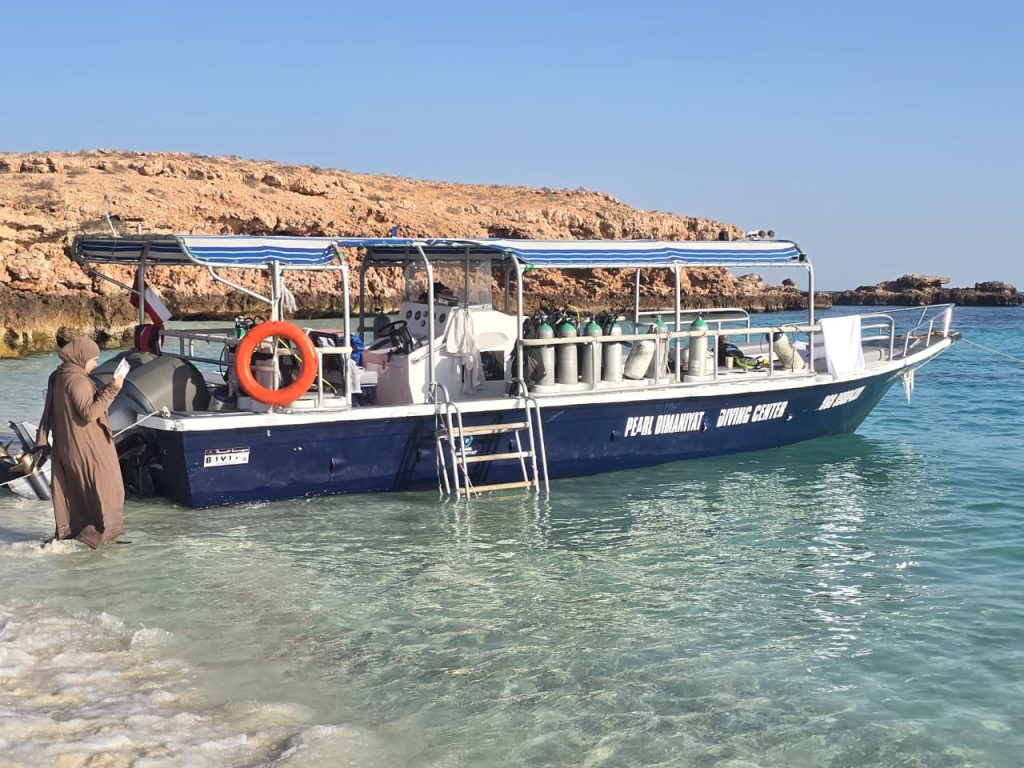
Guided trips with Pearl Dimaniyat Diving Center launch from Seeb Marina, providing direct boat access to the reserve’s top reefs and wreck sites along the Muscat coast.
The Best Dive Spots Around the Daymaniyat Islands
The archipelago consists of nine limestone islands surrounded by distinct coral ecosystems, drop-offs, and sandy channels.
• Turtle City: The reserve’s most famous signature site. Massive plate corals host dozens of green and hawksbill sea turtles feeding or resting on the ledges. Depths range between 8 and 18 meters, making it accessible to Open Water divers and snorkelers.
• Aquarium: Located on the eastern side of the chain, Aquarium is a pelagic hotspot with depths up to 25 meters. Current sweeps across the plateau, drawing trevally, barracuda, stingrays, and docile leopard (zebra) sharks resting on the seabed.
• Police Bay & Coral Garden: Sheltered bays with calm surfaces, gentle currents, and sprawling table coral fields filled with clownfish, triggerfish, and honeycomb morays.
• Al Munassir Wreck (Bandar Khayran): Sunk intentionally in 2003 off Muscat’s southern coastline, this 84-meter-long naval landing vessel sits between 10 and 28 meters.
Fully encrusted with soft corals, it has become a haven for giant moray eels, groupers, and nudibranchs. Dive Conditions & What to Expect Underwater Visibility and water conditions vary across the diving calendar in northern Oman: Season Water Temp Visibility Primary Marine Highlights Winter & Spring (Nov – Apr) 23°C – 26°C 15m – 25m+ Turtles, rays, cuttlefish, schooling trevally, calm sea surfaces Summer & Early Autumn (May – Oct) 27°C – 31°C 8m – 20m Plankton blooms, Whale sharks, leopard sharks, mobula rays During the summer months, plankton-rich upwellings lower visibility on some days, but that nutrient spike is precisely what attracts migrating whale sharks to surface waters right around the Daymaniyat archipelago. Beginner vs. Advanced: Which Trip Fits You? • First-Time Divers: The Try Dive (Discover Scuba) program offers direct, one-on-one instructor supervision in shallow, sandy lagoons where beginners can breathe underwater for the first time without committing to a full multi-day course.
• Open Water Divers: Most reef sites around the islands sit within 12 to 18 meters, offering mild currents, bright natural light, and plenty of bottom time. • Advanced Divers: Deep walls at Aquarium and penetrations on the Al Munassir wreck offer 25- to 30-meter descents with moderate drift conditions. Pearl Dimaniyat also runs Overnight Camping & Diving Safaris (2 days / 1 night) on the islands during open landing seasons, pairing daytime reef dives with sunset views, beach barbecues, and night turtle watches.
How to Book Your Muscat Dive Trip Trips depart daily from Seeb Marina, roughly 20 minutes from Muscat International Airport. Full gear sets, Ministry of Environment island permits, and refreshments are arranged directly with the operator. Bookings and custom private boat charters can be scheduled directly through Pearl Dimaniyat or by messaging the dive team (+968 9980 4381 / info@pearldimaniyat.com).